




Measurement
First, a map of the cornea
A topography scan checks whether the cornea is suitable for laser. The colors show steep and flat regions; an irregular map can point to astigmatism or keratoconus.

About




Our departments
Laser and refractive errors
Lenses and cataract
Strabismus and lazy eye
Glaucoma and retina
Ocular surface
Eyelid and periocular aesthetics
Dentistry
Department pageDoctors
Eye care
Specialist ophthalmologists for laser, smart lens, cataract and cornea treatments. SGK contracted.
SMILE and excimer laser, cataract, keratoconus, smart lenses, glaucoma, strabismus, pediatric eye care and eyelid aesthetics: you are in safe hands.
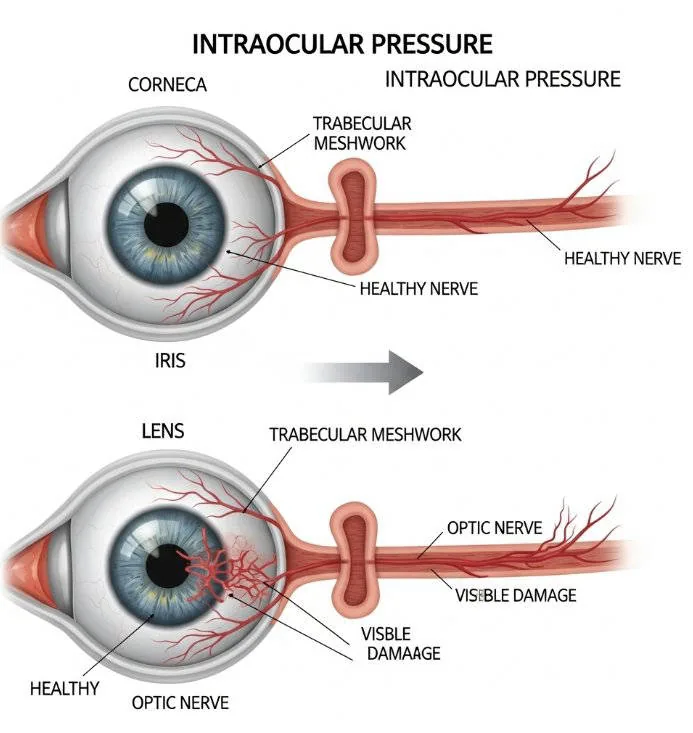
Raised eye pressure damages the optic nerve. Early diagnosis is vital to stop vision loss progressing.
Learn moreMacular degeneration should be treated under specialist care before permanent vision loss occurs.
Learn moreDiabetic retinopathy is the most common cause of blindness after 50. Eye checks after diagnosis are essential.
Learn moreRemoving sagging skin and excess tissue from the upper and lower lids restores a rested look.
Learn moreWe plan the right surgical treatment for ptosis, when the eyelid sits lower than normal.
Learn moreHyaluronic acid refreshes the tired look caused by under-eye bags and dark circles.
Learn morePeriocular mesotherapy supports the skin against fine lines and a tired appearance.
Learn moreExcimer laser reshapes the cornea's refractive power with micron precision: reducing it for myopia, increasing it for hyperopia and evening it out across the surface for astigmatism.
Measurement
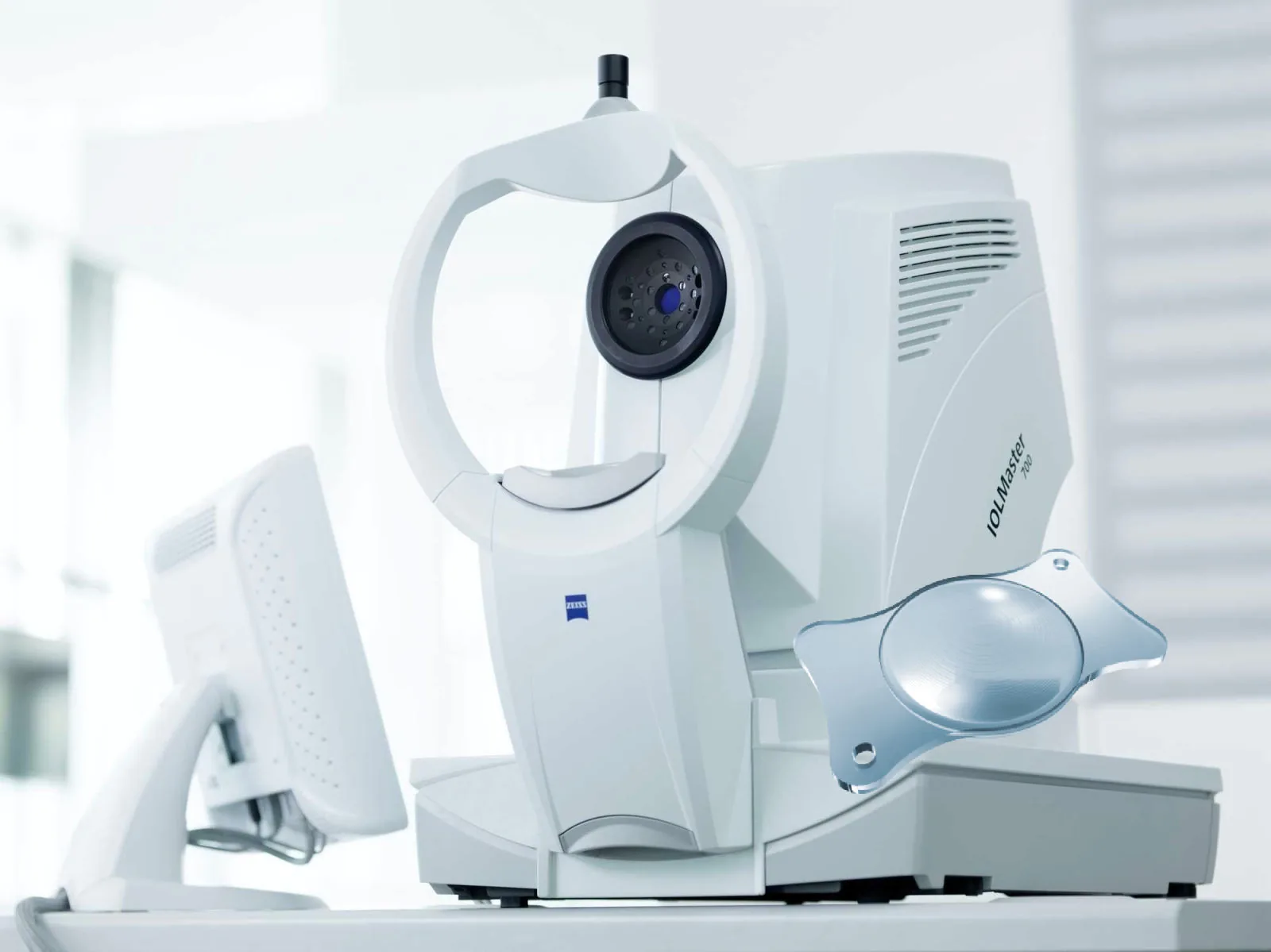
A topography scan checks whether the cornea is suitable for laser. The colors show steep and flat regions; an irregular map can point to astigmatism or keratoconus.
No-Touch laser · about 3 min per eye
In transepithelial PRK the surface cell layer is removed by the laser rather than with alcohol or instruments. Nothing touches the eye, so the procedure is more comfortable.
Femto-LASIK · about 100 microns
A layer of about 100 microns is lifted from the corneal surface with a computer-controlled femtosecond laser, the excimer laser is applied and the layer is laid back. Vision is clear the next day.
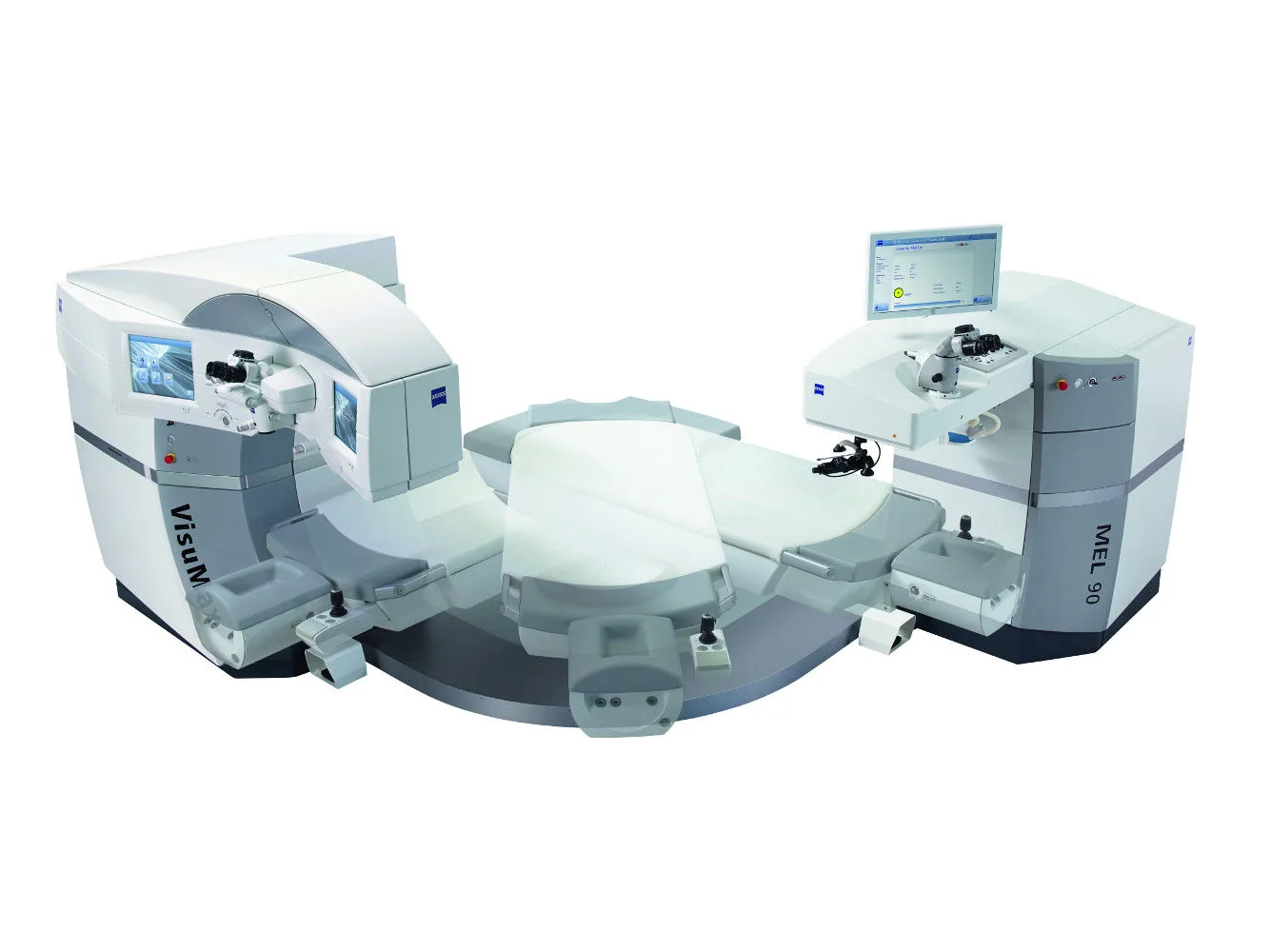
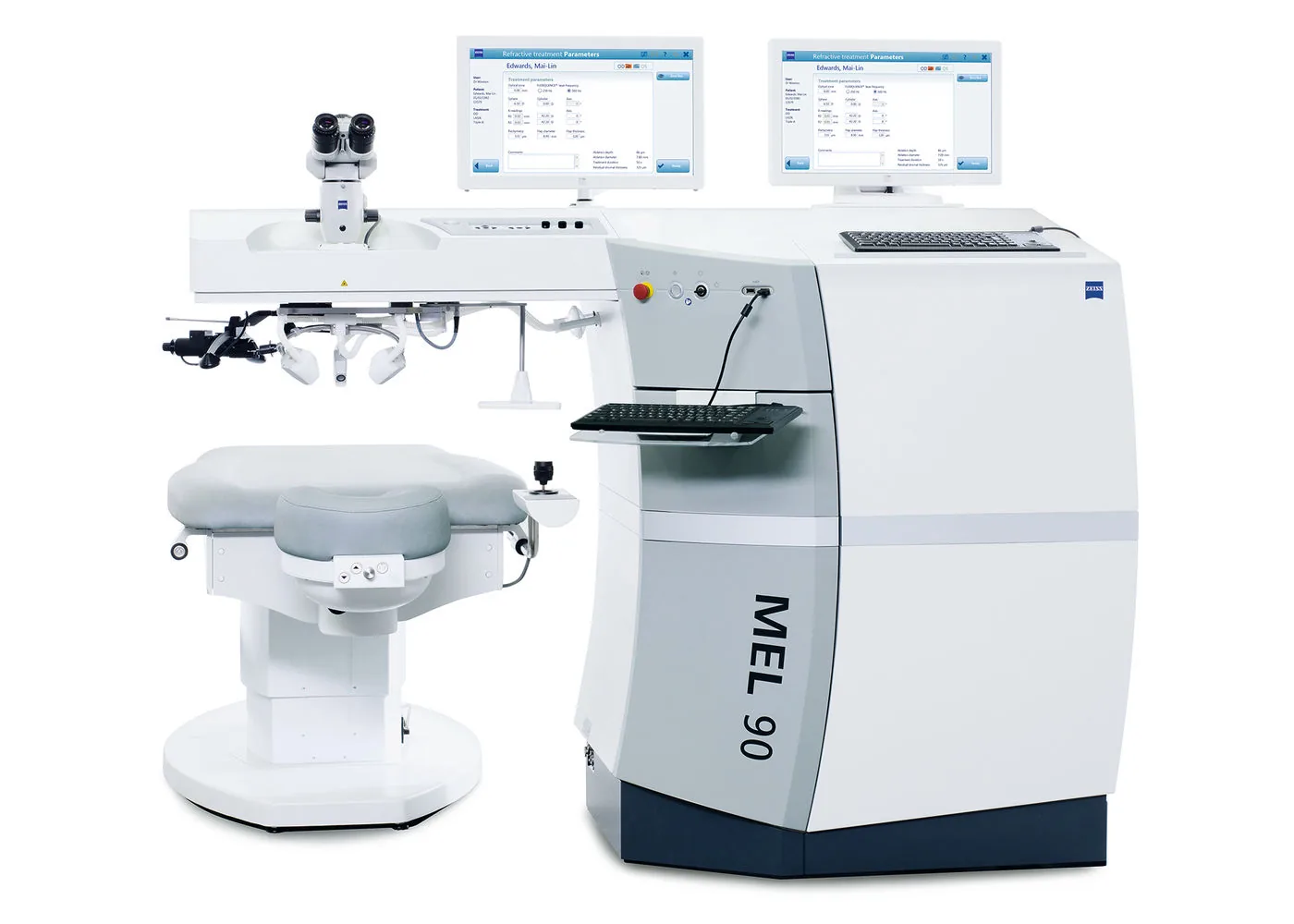
ZEISS MEL 90
Our latest-generation ZEISS MEL 90 detects eye movement immediately and adjusts the laser accordingly.
About excimer laserMyopia, hyperopia and astigmatism come from small differences in how the eye bends light. Drag the line to see the difference.
The eye bends light more than it should. Distant objects look blurred and lights scatter at night.
Refractive errors
With our team of specialist doctors, your health is in safe hands.
The most important stage of excimer laser is choosing the right patient and the right method. The examination follows these steps.
Why you want laser, your expectations, work, hobbies, health conditions and medications are discussed before the exam.
Your prescription is measured, eye pressure checked, and strabismus and microscopic examinations are performed.
A topography scan checks whether the corneal structure is suitable for laser.
If the cornea is suitable, a dilated refraction and retinal exam follow. The dilated measurement is mandatory for every laser patient.
If all findings are suitable, the method, timing, treatment and follow-up plan are agreed with you.

SGK
We are contracted with SGK (Turkish Social Security). Medically necessary surgery such as cataract may be covered; laser and smart lens surgery are not covered by SGK.
Contracted institutionsThe goal of laser surgery is to free the person from eyeglasses or lenses. Achieving this means the laser surgery was successful. We plan laser treatment so that the patient is left with no diopter at all. However, due to individual differences, some people may be left with a low residual diopter such as 0.25, 0.50, or even 0.75. These residual diopters usually do not create a need for eyeglasses and are therefore not considered a failure. We never tell our patients “your diopter will be reset to zero”; instead we say, “our goal is for you to no longer need eyeglasses or lenses.” The term “reset to zero” is a marketing expression, not a scientific one.
Excimer laser eye surgery does not cause cataracts. If someone who has had excimer laser eye surgery develops cataracts later in life, there is no obstacle whatsoever to having cataract surgery. The belief that “people who have had laser eye surgery cannot have cataract surgery” is completely false.
No pain is felt during excimer laser eye surgery.
The likelihood of the diopter returning after excimer laser surgery is very low. The likelihood is somewhat higher for procedures performed at a young age, before the diopter has stabilized, and at high diopters. However, when the suitable patient criteria mentioned above are met, the likelihood of the diopter returning is very low. If some diopter does return in the future, laser surgery can be performed again.
The common belief that “laser surgery cannot correct astigmatism” is false. Astigmatism is successfully treated with excimer laser.
The most common side effect after laser surgery is dry eye. In almost all patients this dryness is temporary and resolves with medication. However, caution is needed if the patient has severe dry eye before surgery. This once again highlights the importance of having laser surgery performed by an ophthalmologist experienced in laser and corneal surgery, and of a careful preoperative exam.
Even if the eye moves, the laser device detects it immediately and adjusts the laser pulse accordingly.
You can return to your daily routine the day after LASIK, or on day 3 after PRK.
One common misconception is that doctors don't have laser eye surgery. Because of their long and demanding training, doctors in fact have a higher rate of vision problems, and therefore of wearing eyeglasses. Many of our colleagues have solved this problem with laser surgery. A significant proportion of physicians who do not wear eyeglasses have, in fact, had laser surgery. A study published in one of the world's most prestigious ophthalmology journals confirms this. In this study, ophthalmologists who perform laser surgery (refractive surgeons) were surveyed. According to the results, 62.6% of refractive surgeons whose eyes were suitable for laser surgery had the procedure themselves, and more than 90% said they would recommend laser surgery to their close relatives. (Guy M Kezirian et al. Prevalence of laser vision correction in ophthalmologists who perform refractive surgery. J Cataract Refract Surg 2015; 41:1826-1832)
For many conditions, the chance of successful treatment depends on early diagnosis.