














Laser and refractive errors · Laser Eye Surgery, Known In Turkish As 'Göz Çi̇zdi̇rme'
Excimer Laser
Excimer laser, known in Turkish as “göz çizdirme”, frees you from myopia, astigmatism and hyperopia quickly.
Doctors in this field

What Is Excimer Laser Eye Surgery, Also Known as Laser Eye Surgery?
There are three alternatives for correcting vision problems such as myopia, hyperopia, and astigmatism: eyeglasses, contact lenses, and excimer laser. In the past, these problems were corrected by making fine incisions in the cornea, the clear front part of the eye, using precision blades. The term “GÖZ ÇİZDİRME” (literally, “scratching the eye”) actually refers to this older method. Today, however, correcting a person's diopter is done with excimer lasers, and no incision of any kind is made in the cornea. For this reason, it is more accurate to use the term excimer laser, rather than laser eye surgery, for the procedure used to get rid of diopters.
Excimer lasers have been used to treat vision disorders since 1988. Today it is the most commonly performed treatment and the one with the highest patient satisfaction. During the procedure, the refractive power of the cornea is changed with micron-level precision. In nearsightedness the refractive power is reduced, in farsightedness it is increased, and in astigmatism the refractive power is evened out across the entire corneal surface. The procedure takes place extremely quickly.
Who Can Have Excimer Laser Eye Surgery (Laser Eye Surgery)?
People who want to have excimer laser surgery must meet these 3 conditions:
- Being 18 years of age or older,
- Having a stable diopter, meaning the vision problem has not worsened by more than 0.5 diopters within a year,
- Having a corneal structure suitable for the procedure.
In addition, excimer laser surgery is not recommended for people with diabetes, connective tissue disease, or rheumatism, or for women who are pregnant or breastfeeding.
Still, it should be remembered that one of the fundamental rules of medicine is: “There are no diseases, only patients.” In other words, every patient is unique and must be evaluated individually. Therefore, we cannot say that everyone who meets these criteria will have laser surgery, or that everyone who does not meet them definitely cannot.

What Are the Methods of Excimer Laser Eye Surgery (Laser Eye Surgery)?
There are two main types of excimer laser eye surgery: PRK (Photorefractive Keratectomy) and Femto-LASIK (Laser in situ Keratomileusis). We cannot say that one method is superior to the other. Both methods have their own advantages and disadvantages. When the right method is chosen for the right patient, there is no difference in outcomes. Neither procedure causes pain or a stinging sensation.
PRK: In this method, the surface cell layer of the cornea is first removed using a surgical instrument or alcohol. The excimer laser is then applied to lower the diopter. A contact lens is then placed on the eye. The surface cell layer regenerates on its own within about 3 days, at which point the contact lens is removed. The procedure takes about 3 minutes per eye. A follow-up exam is done between day 3 and day 5 after the laser.
Advantages of PRK:
- Can be applied to thin corneas.
- Dryness is milder and shorter in duration.
- The likelihood of developing corneal ectasia later on is lower.
- Cost is lower since only a single laser system is used.
Disadvantages of PRK:
- Stinging, watery eyes (epiphora), and light sensitivity that can last up to two days.
- Full visual recovery takes longer than with LASIK.
- Possibility of corneal haze at high diopters.
Femto-LASIK: In this method, a thin layer (flap) of about 100 microns is first lifted from the corneal surface. The tissue lifting once done with a blade is now performed on a personalized basis with a computer-controlled femtosecond laser. The use of the femtosecond laser has significantly reduced the side effects associated with LASIK. After the tissue is lifted, the excimer laser is applied to lower the diopter, and the lifted layer (flap) is repositioned. The procedure takes about 7 minutes per eye. A follow-up exam is done on day 1 after the laser.
Advantages of Femto-LASIK:
- Aside from a burning sensation that can last up to two hours after the laser, no discomfort is felt.
- Clear vision is achieved the next day, and the person returns to daily life.
- Since there is no risk of corneal haze, it can be applied at high diopters.
Disadvantages of Femto-LASIK:
- The cornea must be of a certain thickness.
- The likelihood of developing dryness is higher.
- Cost is higher since two laser systems are used.
What Is No-Touch Laser?
Known among the public as “No-Touch laser”, transepithelial PRK is in fact a type of PRK. In standard PRK, the surface cell layer is removed with alcohol or an instrument, whereas in No-Touch laser it is removed with the laser itself, without touching the eye. Because the eye is not touched, the patient is more comfortable during the procedure. The recovery period and outcomes after the laser are no different from standard PRK.
Is There a Laser for Near Vision Problems?
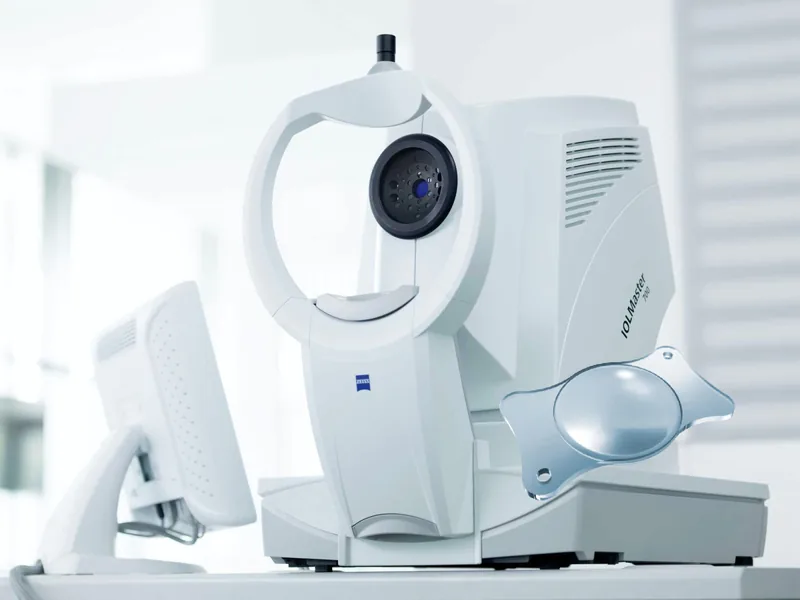
Excimer laser procedures were initially used only for distance vision problems. However, innovations in technology and device software have made it possible to use excimer laser for near vision problems as well. In our clinic, near vision problems can be corrected with excimer laser using the Presbyond® software on our latest generation ZEISS MEL 90 device.
What Is the Preparation Process for Excimer Laser Eye Surgery (Laser Eye Surgery)?
The most important stage of the excimer laser procedure is selecting the right patient and the right method. For this reason, excimer laser surgery (laser eye surgery) must always be performed by physicians experienced in laser and corneal surgery. Before the laser, a detailed conversation with the patient and a thorough eye exam must take place. Many topics, such as why the patient wants laser surgery, their expectations, occupation, hobbies, sports activities, existing conditions, and medications used, should be discussed before the exam.
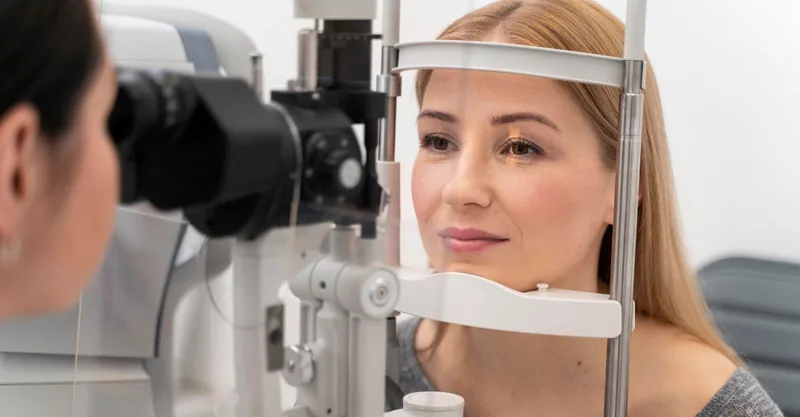
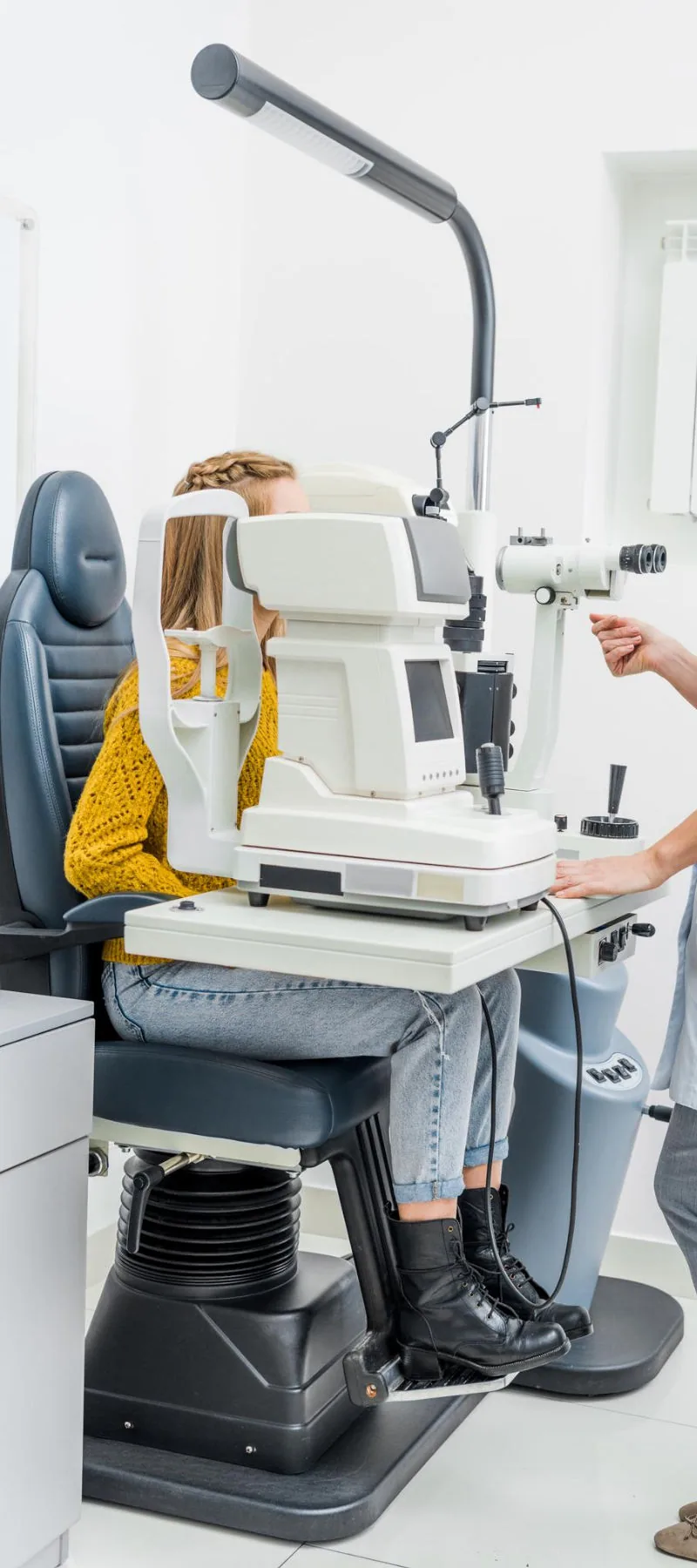
A preliminary exam then follows. In this exam, the diopter is determined, eye pressure is measured, and a strabismus exam and a microscopic exam are performed. Next, a topography scan checks whether the corneal structure is suitable for laser treatment. If the corneal structure is suitable, measurements with dilating drops and a retinal exam are performed. Measurement with dilating drops is mandatory for every patient undergoing laser surgery.
If all exam findings are suitable for laser treatment, a consultation is held with the patient to determine the laser method, timing, and treatment and follow-up plan.
What Should Patients Pay Attention to Before Excimer Laser Eye Surgery (Laser Eye Surgery)?
- Stop wearing contact lenses 2 days before your laser exam and procedure.
- Do not use perfume or deodorant, and do not wear eye or facial makeup on the day of your laser procedure.
- Come to the laser procedure with a companion.
- You will not be able to drive immediately after the laser procedure. It is best to arrange for someone to drive you.
- There is no harm in eating before the laser procedure.
- It is a good idea to bring sunglasses with you.
What Is the Process Like After Excimer Laser Eye Surgery (Laser Eye Surgery)?
After PRK, the patient will have stinging, watery eyes, and light sensitivity for about 2 days. Rest is therefore needed. The patient can return to daily life from day 3 onward. There will also be mild haziness for about 1 month after PRK, which does not affect daily life but can be noticed. The contact lens placed during the laser is removed at the day 5 follow-up. The patient uses artificial tear drops for about 1.5 months and returns for a second follow-up.
After Femto-LASIK, the patient will have a burning sensation for about 2 hours. The next day, the person returns to daily life seeing clearly. Only swimming in the sea or a pool is not recommended for 4 weeks. The patient uses artificial tear drops for about 1.5 months and returns for a second follow-up.
Frequently asked questions
Will my vision be reset to zero after laser eye surgery?
The goal of laser surgery is to free the person from eyeglasses or lenses. Achieving this means the laser surgery was successful. We plan laser treatment so that the patient is left with no diopter at all. However, due to individual differences, some people may be left with a low residual diopter such as 0.25, 0.50, or even 0.75. These residual diopters usually do not create a need for eyeglasses and are therefore not considered a failure. We never tell our patients “your diopter will be reset to zero”; instead we say, “our goal is for you to no longer need eyeglasses or lenses.” The term “reset to zero” is a marketing expression, not a scientific one.
Does cataract develop after laser eye surgery, and can I have cataract surgery later in life?
Excimer laser eye surgery does not cause cataracts. If someone who has had excimer laser eye surgery develops cataracts later in life, there is no obstacle whatsoever to having cataract surgery. The belief that “people who have had laser eye surgery cannot have cataract surgery” is completely false.
Is pain felt during laser eye surgery?
No pain is felt during excimer laser eye surgery.
Can my diopter come back after laser eye surgery, and can I have laser surgery again?
The likelihood of the diopter returning after excimer laser surgery is very low. The likelihood is somewhat higher for procedures performed at a young age, before the diopter has stabilized, and at high diopters. However, when the suitable patient criteria mentioned above are met, the likelihood of the diopter returning is very low. If some diopter does return in the future, laser surgery can be performed again.
Can laser eye surgery be performed for astigmatism?
The common belief that “laser surgery cannot correct astigmatism” is false. Astigmatism is successfully treated with excimer laser.
Is dry eye very common after laser eye surgery?
The most common side effect after laser surgery is dry eye. In almost all patients this dryness is temporary and resolves with medication. However, caution is needed if the patient has severe dry eye before surgery. This once again highlights the importance of having laser surgery performed by an ophthalmologist experienced in laser and corneal surgery, and of a careful preoperative exam.
Is it a problem if I move my eye during laser eye surgery?
Even if the eye moves, the laser device detects it immediately and adjusts the laser pulse accordingly.
When can I return to my daily routine?
You can return to your daily routine the day after LASIK, or on day 3 after PRK.
Why don't doctors have laser eye surgery?
One common misconception is that doctors don't have laser eye surgery. Because of their long and demanding training, doctors in fact have a higher rate of vision problems, and therefore of wearing eyeglasses. Many of our colleagues have solved this problem with laser surgery. A significant proportion of physicians who do not wear eyeglasses have, in fact, had laser surgery. A study published in one of the world's most prestigious ophthalmology journals confirms this. In this study, ophthalmologists who perform laser surgery (refractive surgeons) were surveyed. According to the results, 62.6% of refractive surgeons whose eyes were suitable for laser surgery had the procedure themselves, and more than 90% said they would recommend laser surgery to their close relatives. (Guy M Kezirian et al. Prevalence of laser vision correction in ophthalmologists who perform refractive surgery. J Cataract Refract Surg 2015; 41:1826-1832)