














Strabismus and lazy eye · Lazy Eye
Lazy Eye (Amblyopia)
Amblyopia comes from underdeveloped visual pathways. Treated early, it can be corrected.
Doctors in this field


What Is Amblyopia?
Amblyopia is when a patient cannot see clearly even though there is no structural problem in the eye itself. The reduced vision is caused by underdevelopment of the visual pathways in the brain.
How Does Amblyopia Develop?
Infants see very little at birth. As the visual pathways develop, they begin to see clearly. The development of the visual pathways continues until age 6. If an adverse condition that reduces vision occurs during the period when the visual pathways are developing, these pathways fail to develop properly and vision remains poor.
What Are the Causes of Amblyopia?
Many conditions that negatively affect vision during childhood can cause amblyopia. The most important causes of amblyopia are strabismus and refractive errors.
- Strabismus (Eye Misalignment): If one eye is misaligned, the child constantly uses the non-misaligned eye. The nerve pathways from the misaligned eye to the brain fail to develop, and that eye remains amblyopic (lazy). If both eyes are misaligned, the child uses the right eye at times and the left eye at other times. As a result, the likelihood of amblyopia is lower.
- Refractive Errors (Having a Diopter): If there is a significant difference in diopter between a child's two eyes, the nerve pathways from the eye with the higher diopter to the brain fail to develop, and that eye remains amblyopic. If both eyes have a high diopter, both eyes become amblyopic. Hyperopia has a stronger amblyopia-causing effect.
- In addition, conditions such as congenital cataract, ptosis (droopy eyelid), and glaucoma can also cause amblyopia.
What Are the Symptoms of Amblyopia?
Amblyopia usually has no symptoms. This is because it develops in childhood, and children are not aware that they see poorly. In cases of amblyopia caused by strabismus, parents bring their children in for the strabismus and only learn of the amblyopia after the exam. However, amblyopia caused by a refractive error is discovered very late if routine exams are not performed. For this reason, parents should not skip routine eye exams (at 3 months, 1 year, 3 years, and 6 years) even if their child appears to have no problems.
How Is Amblyopia Treated?
Treatment of amblyopia must be completed by age 9. At older ages, since development of the visual pathways is complete, the likelihood of benefiting from treatment is low.
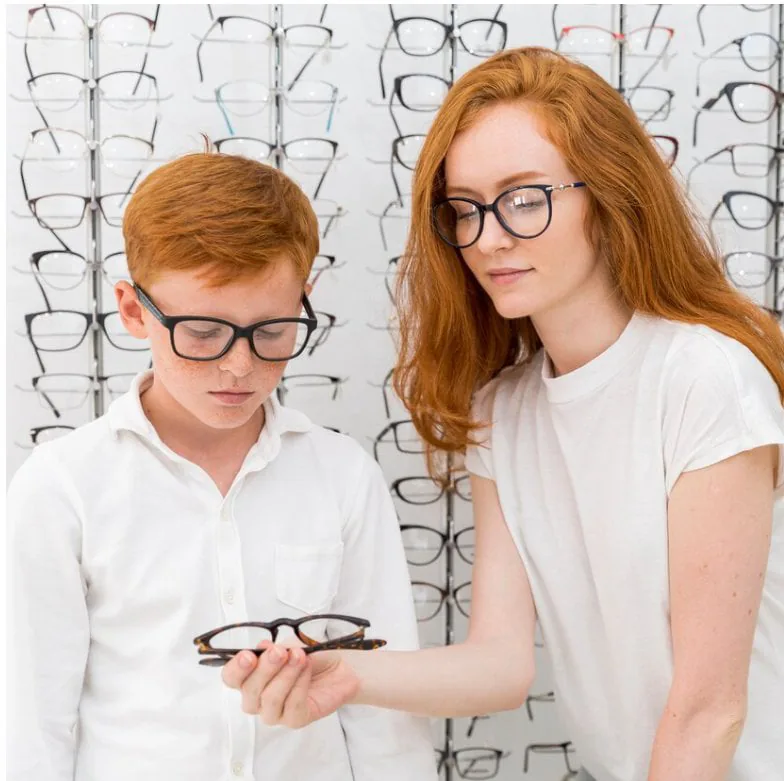
In treatment, if there is a refractive error, appropriate eyeglasses are prescribed first. A wait of 1 to 2 months is needed for the child to adjust to the eyeglasses and for their amblyopia-correcting effect to become apparent. Patching therapy, the main treatment for amblyopia, is then started. The goal of this treatment is to patch the better-seeing eye and make the weaker eye work. Patching therapy is a difficult process for the child and family and requires patience. The child will not want to be patched at first. Parents must persist with patching therapy without giving up, because there is no alternative. The patching duration is determined based on the child's age and the severity of the amblyopia. The prescribed duration can be split up over the day. For example, if 3 hours of patching is prescribed, it can be done as 1.5 hours in the morning and 1.5 hours in the afternoon. What matters is that during patching, the child engages in close-range activities requiring attention, such as reading, drawing, coloring, or playing games on a phone. Watching television or wandering around the house during patching provides no benefit.
In addition, some computer programs such as “Neurovision” are also used in the treatment of amblyopia. However, these treatments are not as effective as patching.
Can Amblyopia Be Treated with Laser or Surgery?
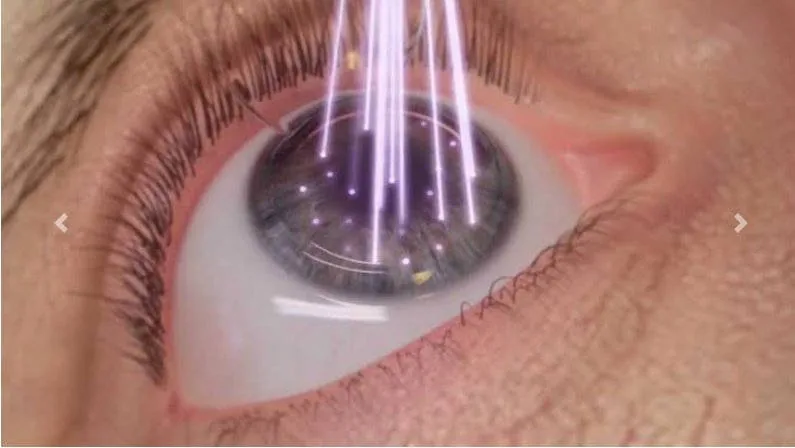
Treating amblyopia after age 9 to 10 is very difficult. It is not possible to treat amblyopia with a method such as laser or surgery.