














Lenses and cataract · Trifocal Intraocular Lenses
Smart Lenses
Smart intraocular lenses let you see far, intermediate and near distances clearly without glasses.
Doctors in this field

What Is a Premium Lens (“Smart Lens”)?
The natural lens of the eye is one of its refractive structures. Normally, the lens increases its refractive power when looking at near objects. However, after age 45, due to aging, the lens can no longer increase its refractive power, and near vision problems begin. For this reason, reading glasses become necessary after age 40 to 45.
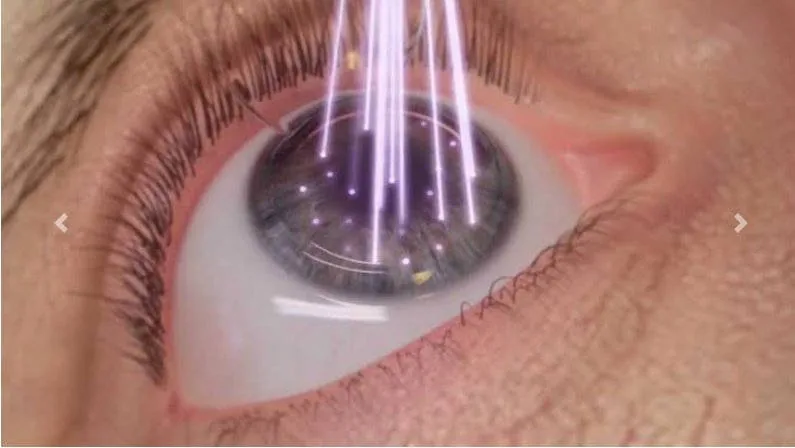
Today, the lenses marketed as “smart lenses” (trifocal lenses) are artificial lenses implanted in place of the eye's own natural lens, designed to provide clear vision at every distance without eyeglasses.
In fact, describing these lenses as “smart” is a term specific to Turkey and is not a scientific description. Their defining feature is not being “smart” but being trifocal, meaning three-focus. The first focus provides clear distance vision (driving, watching television), the second focus provides clear intermediate vision (using a computer or phone), and the third focus provides clear near vision (reading).
What Are the Types of Intraocular Lenses?
Cataract is the most common cause of vision loss in people over 50. Its treatment involves removing the eye's clouded natural lens and implanting an artificial lens in its place. In addition, lens surgery can also be performed on suitable patients who have not yet developed cataracts but want to be free of both distance and near eyeglasses. Today there are many types of intraocular lenses.
1. Standard Monofocal Lenses: These provide clear vision only at distance. Patients implanted with this lens will definitely need reading glasses. If the patient has astigmatism, they will also need distance glasses. Their advantage is a lower cost and the absence of glare.
2. Monofocal Astigmatism-Correcting (Toric) Lenses: Used in cataract surgery for patients with astigmatism. This means the patient no longer needs distance glasses after surgery. However, the patient will still definitely need reading glasses.
3. EDOF (Extended Depth of Focus) Lenses: These provide good, glasses-free vision at distance and intermediate range (60 to 80 cm, such as using a computer or phone). However, they require low-power reading glasses for near vision. Their most important advantage over full trifocal lenses is that they do not cause glare at night. For this reason, they are more suitable than full trifocal lenses for patients who work at night, such as long-haul drivers.
4. Full Trifocal Lenses: Their most important advantage is providing glasses-free vision at distance, intermediate, and near range. Their most important disadvantages are a slight loss of sharpness at distance and glare at night.
5. Trifocal Astigmatism-Correcting (Trifocal Toric) Lenses: If a patient receiving a trifocal lens also has astigmatism, the lens must also have an astigmatism-correcting feature. Otherwise, the trifocal lens will not perform as expected.
What Are the Disadvantages of Premium (Trifocal) Lenses?
Trifocal lenses have a very important advantage: providing clear vision at every distance without eyeglasses. Being able to answer a ringing phone without first searching for glasses, or instantly reading a piece of paper without glasses, is a huge convenience for people. However, alongside these major advantages, these lenses have 2 disadvantages.
The first disadvantage of trifocal lenses is that they cause a certain amount of glare at night. This occurs, to a greater or lesser degree, with every trifocal lens. Glare does not occur during the day; it is noticed especially at night while driving, as a scattering of other cars' headlights. However, glare does not create a major problem except for people who drive constantly at night. Patients who enjoy the comfort of glasses-free near vision generally do not find the glare to be a significant issue. In a significant proportion of patients who do experience problems from glare, this issue disappears within a few months (neuroadaptation). For people who do not want glare, especially those who must drive constantly at night, EDOF lenses may be a better option.
The other disadvantage of trifocal lenses is a slight reduction in contrast (sharpness) at distance. This is because these lenses redirect about 10% of the light used for distance vision toward near vision. Although this causes a slight loss of sharpness at distance, in almost all of our patients this does not affect daily life or create a problem.
Who Can Have Premium (Trifocal) Lenses Implanted?
Originally developed for cataract patients, trifocal lenses are now, due to high patient satisfaction, also safely used for patients who do not have cataracts but who do not want to wear distance or reading glasses.
When assessing whether a person is a suitable candidate for premium (trifocal) lens surgery, we look for the answers to two questions:
- 1. Is the patient suitable?
- 2. If the patient is suitable, is their eye suitable?
For a patient being considered for trifocal lens surgery, the first step is to assess their occupation, daily living conditions, frequency of night driving, and expectations. Patients who are not overly detail oriented and whose occupation or daily life would not be affected by glare are better candidates for trifocal lenses. However, people with occupations such as long-haul truck drivers who must drive constantly at night, or watch repairers who need to see very fine detail, as well as meticulous, detail oriented people who magnify even the smallest issue in their daily lives, are not very suitable for trifocal lenses. EDOF lenses are more suitable for these patients.
If we decide that a patient being considered for trifocal lens surgery is a suitable candidate, the second step is to assess whether their eye structure is suitable. For a trifocal lens to be implanted, the person should have no eye problems other than cataract and refractive error. For example, conditions such as strabismus, corneal problems, macular degeneration, optic nerve weakness, or glaucoma are obstacles to implanting a full trifocal lens. However, EDOF lenses can be implanted in these patients.
Can Diabetic Patients Have Premium (Trifocal) Lenses?
In the past, trifocal lens surgery was not performed on diabetic patients. However, scientific studies and our accumulated experience have shown that these lenses can be safely implanted in patients who have not developed diabetes-related damage to the retina (diabetic retinopathy).
How Are Premium Lens Measurements Taken?
The most important cause of dissatisfaction after trifocal lens surgery is a deviation in the lens power. While small power deviations cause few complaints with standard lenses, power deviations with trifocal lenses are bothersome to patients. Minimizing the likelihood of this deviation is possible by using high technology equipment and having surgery performed by experienced physicians. In our clinic, measurements are taken with the Zeiss IOL Master 700, the device used in the world's best clinics. It is the first and only one of its kind in our region.
Do Premium Lenses Have a Limited Lifespan?
Trifocal lenses are implanted in the eye during surgery. They are not removed and reinserted afterward. The properties of the trifocal lens do not change for the rest of the patient's life, and the patient sees well at every distance without needing eyeglasses for the remainder of their life.
How Much Do Premium Lenses Cost?
Many of our patients contact our clinic by phone or email to ask about the price of trifocal lenses.
First, we must state that it is not appropriate to give price information to a patient we have not examined and whose suitability for a trifocal lens we do not know. Having our patients come in for an exam allows us to first decide whether trifocal lenses are suitable for the patient's eyes, to explain the pros and cons of these lenses in person, and to decide on surgery together with the patient.
Another important point to know about trifocal lenses is that they are not covered by SGK (Turkish Social Security), and just as multifocal (distance and near combined) eyeglasses are more expensive than other eyeglasses, trifocal lenses are also more expensive than other lenses. However, considering that the patient will never again have to pay for distance or reading glasses for the rest of their life, trifocal lenses actually pay for themselves within a short time.
Unfortunately, we are increasingly seeing trifocal lenses and surgical materials manufactured in the Far East and India, whose quality has not yet been proven, used more often simply to reduce costs. In our view, risking eye health to save a small amount on surgery is nothing short of reckless. Moreover, correcting the problems these materials can cause is far more costly. It bears repeating: “The patient's future vision quality depends on this surgery, and this surgery cannot be undone.” We must not risk our eyes, our most delicate sense organ and the one we rely on most in daily life, for the sake of minor savings.
Please Note!
When trifocal lens surgery is performed on the right patient, in the right eye, with accurate measurements, in a hospital using clean, single-use materials, by experienced physicians who observe ethical standards, it makes patients very happy. When this field is treated as a commercial venture rather than a health care service, however, it leads to serious vision problems and patient harm.