















Laser and refractive errors · Refractive Errors
Refractive Errors
Myopia, hyperopia and astigmatism are no longer a problem with advanced technology and specialist doctors.
Doctors in this field
There are 3 types of vision disorders: myopia, hyperopia, and astigmatism.
1. MYOPIA
What Is Myopia?
Myopia is when the refractive power of the eye is greater than normal. It causes difficulty seeing distant objects. It is the most common vision disorder in the general population.
Why Does Myopia Occur?
The exact cause of myopia is not known. Genetic and structural factors create a predisposition to myopia. Today, increasing use of digital devices is causing myopia to develop in more people and causing the diopter of those who already have myopia to increase. For this reason, myopia is expected to become even more common in the future.
How Many Types of Myopia Are There?
There are three types of myopia:
1. Simple (Low Degree) Myopia: Myopia below 3.0 diopters.
2. Moderate Myopia: Myopia between 3.0 and 6.0 diopters.
3. High (Degenerative) Myopia: Myopia above 6.0 diopters, with thinning of the eye's nerve layer (the retina).
What Are the Symptoms of Myopia?
- Blurred vision of distant objects
- Squinting
- Difficulty driving at night due to glare from lights
- Headache, eye strain
Does Myopia Progress?
Congenital myopia is rare. Myopia usually begins in childhood, during school age, and progresses into a person's twenties. The common belief that “diopter progression stops at age 18” is not entirely accurate. It is not abnormal for myopia to continue increasing after age twenty.
There is no definitive treatment that stops the progression of myopia. However, reducing our children's use of digital devices such as phones and tablets, and having them spend more time in sunlight, will slow the progression of myopia.
How Is Myopia Treated?
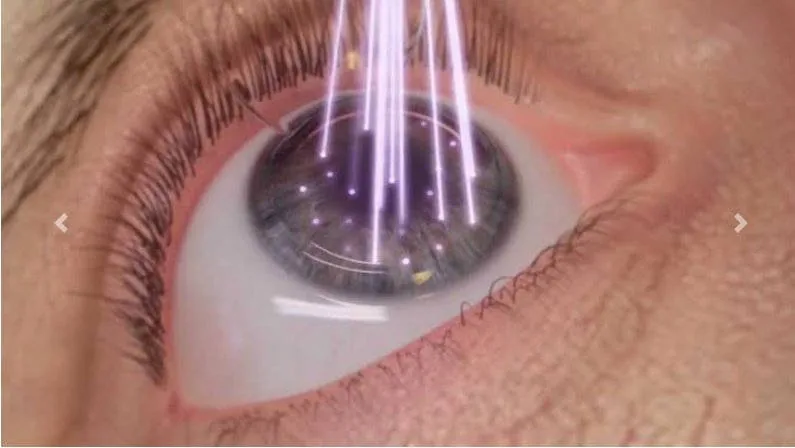
Today's technology offers many alternative methods for treating nearsightedness. The first option is glasses. For patients who do not want to wear glasses, contact lenses or laser are considered. Glasses or contact lenses do not reduce the astigmatism prescription and do not prevent it from increasing. Nearsightedness, which was corrected with excimer laser (laser eye surgery) for many years, is now corrected with SMILE laser, the latest generation of laser. For people whose nearsightedness is too high to be corrected with laser, intraocular lenses are implanted.
2. HYPEROPIA
What Is Hyperopia?
Hyperopia is when the refractive power of the eye is less than normal. Contrary to common belief, hyperopia more often causes problems with near vision than distance vision to worsen first, because when looking at near objects, the eye's accommodation mechanism compensates for the hyperopic diopter. However, as a person ages, the accommodation mechanism weakens, and hyperopia begins to affect near vision as well.
Why Does Hyperopia Occur?
As with other vision disorders, the exact cause of hyperopia is not known, and genetic predisposition is important. In fact, a significant proportion of infants are born hyperopic. Much of this hyperopia resolves by age two. Children in whom it does not resolve remain hyperopic. In addition, after age forty, the refractive power of the eye decreases, creating a tendency toward hyperopia.
What Is Latent Hyperopia?
Hyperopia that is masked by the eye's accommodation mechanism is called latent hyperopia. It does not show up on standard measurements, but it is revealed by measurement with dilating drops. Depending on the degree of hyperopia and the person's accommodative ability, it causes various complaints. It particularly affects near work in a negative way. In some people it causes no complaints at all, while in others it causes severe headaches after just 5 minutes of reading.
What Are the Symptoms of Hyperopia?
For hyperopia to cause symptoms, the eye's accommodation mechanism must fail to compensate for it. If the accommodation mechanism cannot compensate for the hyperopia, the following may occur:
- Blurred vision of distant objects
- Inability to read at close range
- Eye pain, fatigue, watery eyes, and headache while reading
Does Hyperopia Progress?
Hyperopia in childhood generally does not progress, and in some children it even decreases. Hyperopia that develops after age forty, however, can increase with age.
How Is Hyperopia Treated?
Eyeglasses are the most commonly used correction method for vision disorders. For patients who do not want to wear eyeglasses, contact lenses or laser surgery are considered. Eyeglasses or contact lenses do not lower the diopter of hyperopia or prevent it from increasing. It is possible to correct hyperopic diopters with excimer laser (laser eye surgery). Especially in people over 45, another alternative treatment is correcting both distance and near vision together with trifocal intraocular lenses (trifocal, meaning three-focus lenses).
3. ASTIGMATISM
What Is Astigmatism?
Normally, the refractive power of the eye should be the same in every region. If the refractive power varies from region to region, astigmatism occurs. It primarily causes distance vision problems but also affects near vision.
Why Does Astigmatism Occur?
The exact cause of astigmatism is not known. Genetic factors, structural factors, and environmental factors such as prolonged near work and digital device use play a role in its development. Keratoconus is also an important cause of astigmatism, particularly astigmatism that begins during adolescence.
How Many Types of Astigmatism Are There?
There are different types of astigmatism:
1. Myopic Astigmatism: Myopia and astigmatism occurring together.
2. Hyperopic Astigmatism: Hyperopia and astigmatism occurring together.
3. Mixed Astigmatism: The presence of both hyperopic and myopic astigmatism together.
4. Regular Astigmatism: Vision problems can be corrected with eyeglasses.
5. Irregular Astigmatism: Vision problems cannot be corrected with eyeglasses.
What Are the Symptoms of Astigmatism?
The symptoms of astigmatism can vary from person to person. In some people, even a small amount of astigmatism can cause many problems, while others are not even aware that they have a high degree of astigmatism.
- Blurred vision of distant objects, or seeing a shadow alongside them
- Squinting
- Difficulty driving at night due to glare from lights
- Headache and eye strain during prolonged reading or computer use
Does Astigmatism Progress?
Congenital astigmatism generally does not progress, and can even decrease over time. Astigmatism that develops later can progress somewhat during a child's growth period. However, the likelihood of astigmatism progressing is much lower than that of myopia.
There is no definitive treatment that stops the progression of myopia. However, reducing our children's use of digital devices such as phones and tablets, and having them spend more time in sunlight, will slow the progression of myopia.
How Is Astigmatism Treated?
The first treatment option is eyeglasses. For patients who do not want to wear eyeglasses, contact lenses or laser surgery are considered. Eyeglasses or contact lenses do not lower the diopter of astigmatism or prevent it from increasing. The definitive solution is laser surgery. Astigmatism, corrected for many years with excimer laser (laser eye surgery), is now corrected with the latest generation laser, SMILE laser. Another alternative treatment for correcting astigmatism is intraocular lenses, used especially in patients over 45.