












Eye Examination Requirements for Becoming a Police Officer and Entering POMEM


The health requirements a person must meet to become a police officer, that is, to be admitted to the Police Vocational Training Center (POMEM), were set out in the "Regulation on Health Requirements of the Security Organization" dated January 3, 2018. Accordingly, a person who wants to enter POMEM in order to become a police officer must meet the following requirements in terms of eye health.
- There must be no partial or complete color blindness. Colored lenses that allow a person to read the color cards shown during the POMEM health examination are not accepted.
- Eyelid ptosis, strabismus, retinal diseases such as night blindness, elevated eye pressure (glaucoma), and inflammation inside the eye (uveitis) are all barriers to entering POMEM.
- Keratoconus is a barrier to entering POMEM.
- For myopia, if the sum of myopia and astigmatism exceeds 2 diopters for either eye, the person cannot enter POMEM. The important point here is that each eye is evaluated separately. For example, if the right eye has 1.5 diopters of myopia and the left eye has 1.5 diopters of myopia, even though the total is 3, the person can still enter POMEM. What matters is that the total refractive error in a single eye does not exceed 2 diopters.
- For hyperopia, if the sum of hyperopia and astigmatism exceeds 1 diopter for either eye, the person cannot enter POMEM. Again, the important point is that the eyes are evaluated separately.
- In the case of mixed astigmatism, that is, when a person has both myopia and hyperopic astigmatism, or both hyperopia and myopic astigmatism, a transposition procedure is performed. This is a technical matter. People in this situation should definitely consult with an eye doctor.
- A healthy eye has 10/10 vision, and the total for both eyes is 20/20. The total vision level for both eyes of a POMEM candidate must be at least 16/20. In addition, each eye must see at least 7/10. For example, if a POMEM candidate has 6/10 vision in one eye and 10/10 in the other, even though the total is 16/20, they cannot become a police officer, because one eye sees less than 7/10.
- Small corneal spots that do not affect vision and cataract spots that do not reach the visual center are not barriers to entering POMEM.
Laser Treatment and Becoming a Police Officer (POMEM)
Having had laser treatment is not, according to the latest regulation, a barrier to becoming a police officer. For this reason, laser surgery can be performed on a patient whose eye prescription does not meet the requirements specified in the POMEM regulation. It is recommended that the treatment process be completed with laser surgery before going before the POMEM health board. However, people who are eliminated in the health examination should object to the result and complete the laser treatment process until they are re-examined.
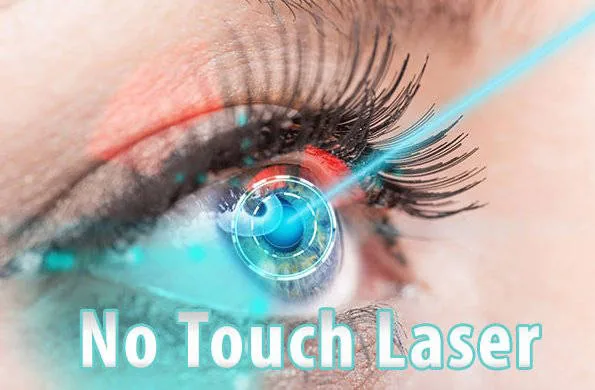
One of the frequently asked questions is which method is recommended for those who will become police officers or soldiers. There are 3 types of laser methods: PRK (No-Touch), LASIK, and SMILE laser. Details of these methods are available on our website. When choosing a laser method for a person who will become a police officer and enter POMEM, there are two additional factors to consider besides the examination findings. These are durability and the healing process.
- Durability: Police work is a profession open to trauma. Police officers are much more likely than ordinary people to be exposed to any kind of impact. Therefore, the eye should not become sensitive to trauma after laser treatment. The methods that least affect the eye's biomechanics, and therefore its durability, are PRK (No-Touch) and SMILE laser. After LASIK, the eye is more sensitive to trauma compared to the other methods. For this reason, we recommend that POMEM candidates undergo PRK (No-Touch) or SMILE laser.
- Healing Process: After PRK (No-Touch), healing and the drop in prescription can take 1 to 1.5 months. After SMILE laser, however, the prescription drops the next day and the person begins to see clearly. For this reason, those with very little time left before their health board examination should have SMILE laser. POMEM candidates who are not under time pressure can also consider the PRK (No-Touch) method.