














What Is Amblyopia (Lazy Eye)? How Is Amblyopia Treated?


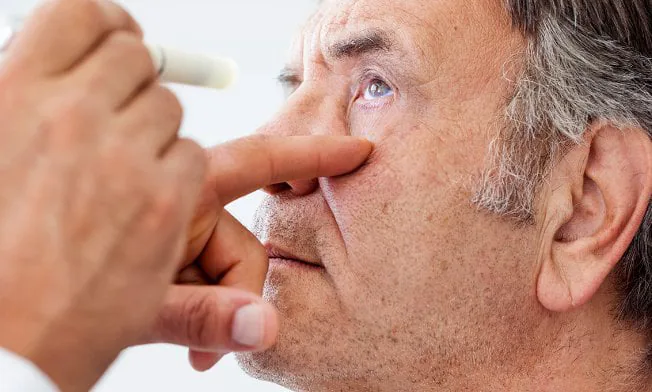
Amblyopia, commonly known as lazy eye, is a medical condition affecting the eyes. What is called lazy eye actually occurs not because of a problem in the eye itself, but because the brain's visual processing center does not develop fully. Images are processed through signals sent to the brain, and in amblyopia these signals are not processed properly.
The development of the brain's visual centers continues, on average, until around age 8 to 10, and is completed within that age range. Because this development can no longer occur after age 10, treatment started after that age may not be fully effective.
Amblyopia can be described as vision loss caused not by a problem in the eye, but by underdevelopment of the visual centers in the brain.
Causes of Amblyopia
There can be many different underlying causes of amblyopia. For the brain's visual centers to develop fully, a clear visual signal must reach them from birth.
In newborns, conditions that impair vision in both eyes, such as cataracts, an eye tumor, glaucoma, or similar health problems, prevent full signals from reaching the brain. This can cause nystagmus (eye trembling), and this condition leads to the progression of amblyopia.
One eye being significantly worse than the other, high refractive errors in both eyes, and conditions such as strabismus are among the main causes. Amblyopia in one eye in particular tends to progress more quickly.
This is because the brain focuses more on the signals coming from the eye that sees well, or the one that does not deviate in cases of strabismus, while largely ignoring the poor signals coming from the weaker eye so that they do not interfere with the good eye's signals. This causes the weaker eye to develop amblyopia even faster.
- When the general causes are examined, they include:
- Pathological problems present from birth or arising around ages 4 to 5
- Conditions known as deprivation, which impair vision in both eyes (cataracts, glaucoma, corneal or retinal problems)
- Anisometropia, meaning one eye is significantly more affected than the other, that is, one-sided myopia, astigmatism, or hyperopia
- Ametropia, meaning high astigmatism or refractive errors present in both eyes
- Strabismus is also observed as a cause.
Symptoms of Amblyopia
The first sign of amblyopia is vision loss that cannot be corrected even with glasses or other treatment methods. The lazy eye sees less clearly than a normal eye. Eye drifting, strabismus, and nystagmus (eye trembling) are also among the symptoms of amblyopia.
Treatment of Amblyopia
Treatment for amblyopia needs to begin before age 8 to 10. After this age range, treatment is considered delayed, and results may not be achievable. The later the underlying cause of amblyopia occurs, the more difficult and lengthy the treatment will be.
Vision problems must be eliminated in individuals with impaired vision. If the underlying cause is congenital cataracts, glaucoma, or a similar condition, surgery is performed urgently to remove the obstacles to vision. In cases of congenital cataracts, this procedure should be carried out just a few days after birth.
During treatment, glasses are typically prescribed as the first step, followed by surgical correction of strabismus if needed. After these treatments, the eyes are treated, and patching therapy is applied to help the amblyopic eye regain its former health. This step is the most important part of treatment.
By covering the better-seeing eye, the treated eye is made to work harder. Although this is a demanding process, following the program set by the doctor is essential for the lazy eye to regain its health.
As for whether surgery exists specifically for amblyopia, no such procedure exists. Surgery may only be chosen to address the underlying conditions that are causing the amblyopia.
For treatment methods to be applied correctly, the causes of amblyopia must be identified, and a plan should be followed accordingly. The earlier it is diagnosed, the higher the success rate will be.
For amblyopia treatment, you can get detailed information by scheduling an appointment with the experienced physicians at İdeal Göz Clinic, a name that stands out among Kayseri eye hospital and Kayseri eye doctor options.