











What Is Laser Eye Surgery?

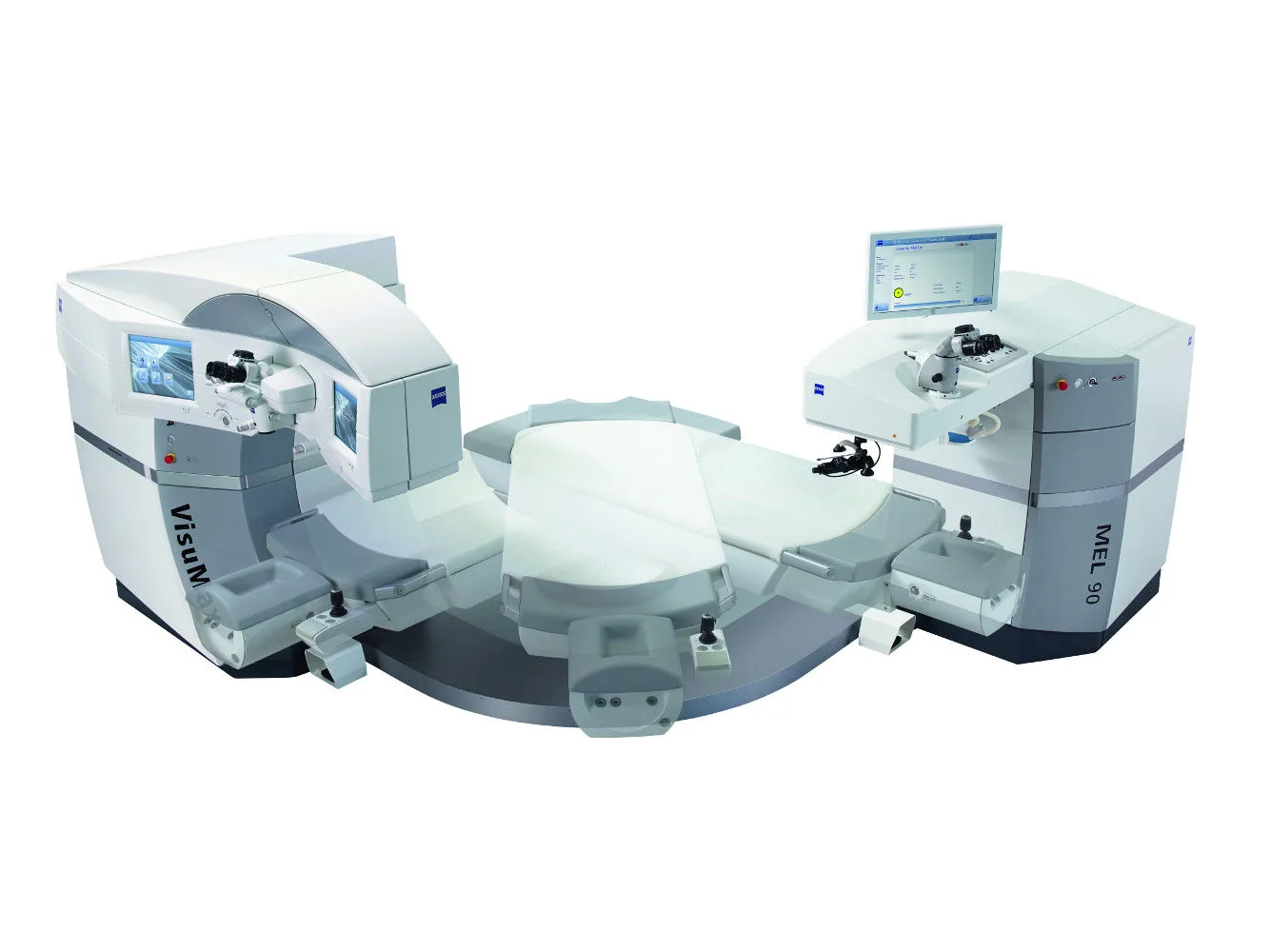
Among the public, the term "laser eye surgery" (known in Turkish as "göz çizdirme") is used instead of the word excimer laser. In fact, laser eye surgery and excimer laser do not refer to the same method. The colloquial term "laser eye surgery" is actually based on an older technique. In this technique, whose real name is radial keratotomy, myopia was corrected by creating incisions on the cornea, but over the years this technique was abandoned and replaced by the excimer laser method. Excimer laser is the name of the device used to perform ablation (shaving) of corneal tissue in PRK (No-Touch laser) and LASIK procedures, and we expect that over time the excimer laser method will also become outdated and be fully replaced by third-generation methods such as SMILE laser. In short, among the public, all of these methods are referred to as laser eye surgery, laser eye surgery operation, excimer laser, or ekzimer laser. In this article, we would like to note that all of these terms are used interchangeably.
Are Excimer Laser and Laser Eye Surgery the Same Thing?
"Excimer" is short for "excited dimer." It is produced by electrically exciting an argon-fluoride gas mixture and is a UV laser with a wavelength of 193 nm. It has been used for 30 years to treat refractive errors of the eye such as myopia, hyperopia, and astigmatism. For this reason, it is also referred to as laser eye surgery, and we can say this is a more accurate term than the colloquial "göz çizdirme."
How Many Types of Laser Eye Surgery Are There?
As mentioned above, radial keratotomy (göz çizdirme) was the first technique used to correct myopia. Today, this technique is no longer used. The first technique we can define as laser eye surgery is PRK (photorefractive keratectomy), which uses the excimer laser device. Since PRK uses excimer laser, it can also be called laser eye surgery. In later years, this technique was refined with various software improvements and began to be applied as transepithelial PRK, which is called No-Touch laser. The second technique is LASIK. Two separate devices are used in this technique. The first is the femtosecond laser device, used to create a flap in the corneal tissue, and the second is the excimer laser device, used after the flap is lifted. This technique is named ILASIK, INTRALASIK, or FEMTOLASIK, depending on the technology of the different commercial companies involved. Among the public, this method is also called "bladeless laser." The only reason it is called bladeless laser is that, in the early days of the LASIK technique, the flap was lifted using a cutting instrument called a microkeratome; later, as mentioned above, with the development of the femtosecond laser system, the flap-lifting step also began to be performed with laser, which is how it came to be called bladeless laser. The third and most recently developed technique is the SMILE laser technique. Excimer laser is not used in this method. In the SMILE laser method, a lenticule (a small piece of tissue) is created within the corneal tissue using the femtosecond device, and this tissue is removed with the help of a special spatula, allowing our patients to be free of their glasses. In short, excimer laser is not used in the SMILE technique, because no shaving of the cornea takes place in this method; the tissue is removed directly in the form of a lenticule.
Why Have So Many Laser Eye Surgery Techniques Been Developed?
Not every patient's eye structure is the same. Some patients have a thinner and steeper cornea, while others have a thicker and flatter cornea. Some patients have a dryness problem, while others do not. The same laser eye surgery method is not suitable for every patient. Let's look at the laser eye surgery methods one by one.
PRK and No-Touch Laser (Transepithelial PRK)
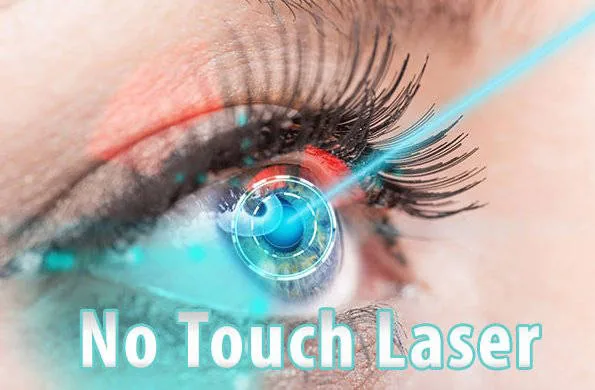
We define this method as surface laser treatment. Only the excimer laser device is used in this laser procedure. We prefer it for myopic and astigmatic patients with a prescription lower than 2 diopters, patients with a thin cornea, and patients with dry eye. In fact, when we need to apply laser treatment to patients with conditions such as keratoconus, this method is our only laser option. So, are PRK and No-Touch laser the same thing? While not exactly identical, we can say they are similar methods. In the No-Touch laser method, thanks to developed software, the laser procedure is applied without removing the cornea's epithelial layer; other than that, it does not differ from PRK in terms of laser outcome or patient comfort.
LASIK, FEMTOLASIK, ILASIK, INTRALASIK, Bladeless Laser
In the LASIK procedure, a flap is lifted in the corneal tissue. If this flap-lifting step is performed with a cutting instrument called a microkeratome, we call it LASIK. If this flap-lifting step is performed with a femtosecond device, we call it FEMTOLASIK. If this flap-lifting step is performed with the femtosecond device known as INTRALASE, we call it INTRALASIK, and finally, if the LASIK procedure is performed using wavefront-guided technology, we call it ILASIK. All of these names are actually terms that arose colloquially, like göz çizdirme, rather than academic terms. Whichever way it is performed, this method is more comfortable than the PRK technique, and our patients can return to normal life within 6 hours. Femtolasik is especially our first choice for hyperopic patients. The disadvantage of this technique is that it is not very suitable for thin corneas and patients with dry eye.
SMILE Laser
This laser method is the most recently developed technology. Only the femtosecond laser device is used in this laser method, meaning the excimer laser device is not used. SMILE laser preserves more of the mechanical structure of the cornea and is a preferred choice for patients with dry eye. This laser method is especially ideal for people involved in contact sports. Its only disadvantage at the moment is that it cannot be applied to hyperopic patients. Studies on SMILE laser for hyperopic patients are ongoing. It is expected that, in the coming years, it will completely replace Femtolasik.
Laser Eye Surgery Prices
Laser eye surgery prices vary depending on the method used. While it is not legal to state prices here, we can briefly provide the following information. Because PRK and No-Touch laser use only a single device, their price is more affordable compared to Femtolasik and SMILE laser. FEMTOLASIK is more expensive than PRK and No-Touch laser because the femtosecond laser device used to lift the flap increases the cost of the laser eye surgery. SMILE laser, being the latest technology, is the most expensive laser eye surgery due to the high licensing fees charged by manufacturers.
Does SGK (Turkish Social Security) Cover the Cost of Laser Eye Surgery?
Laser eye surgery procedures are not covered by SGK.